

Why HR Management is a Growing Career in the UK
We live in a world where emails are automated, and human cashiers have been replaced by self-checkouts. The story doesn’t end here; trained machines are even writing poetry. From the smallest to the biggest tasks, technology is taking over almost everything.
It might seem like people skills are slowly disappearing from the picture. But the truth is, they’re not. It’s not machines that take organizations ahead; it’s always the people. Behind every company that makes progress, there are humans who work hard to achieve goals and make a difference.
If you’re wondering who these people are, they’re the HR management team.
Human resources has been gaining more and more attention, especially in the United Kingdom. More businesses are now acknowledging their role in the development of the workforce. Companies are handling a hundred issues at the same time, like hybrid working models, recruitment, and much more, and HR is more ready than ever to help them with it.
In this blog, we’ll be discussing its role and much more.
How HR is Shaping the Corporate World
Before we get into the details of how HR is changing things, let’s understand what they do.
What Do Human Resource Managers Do?
Think of HR as the engine that runs the people of the company. If a business were a musical band, HR would select members to form the group and ensure they stay. They’re the people behind people who take businesses to the next level.
Their role isn’t limited to one thing. They look for new people, keep the old ones around, and make sure they get paid on time. Apart from this, they manage crises and solve any employee-related issues that come up at work. If you’re studying to get into this field, you can get online HR assignment help!
Now we know what these professionals do, here’s why this field is gaining popularity.
1. From potential to power
The job of these professionals doesn’t end once they hire people. They create highly skilled teams. In addition to this, they boost their confidence and motivation so that they perform better.
“How do they do it then?”
They provide on-the-job training, career development workshops, and supportive benefit programs. This means the staff keep gaining better skills as they work at the company.
Organizations whose employees have a pleasant workplace experience show 21% improved productivity.
2. Keeping up with changes
The corporate world is always changing. There’s always some new technology, some new tool getting introduced. Apart from this, workplace settings shift. So it’s important to adapt.
Around 60% of organizations consider HR as highly crucial for growth and remaining relevant in their respective industry.
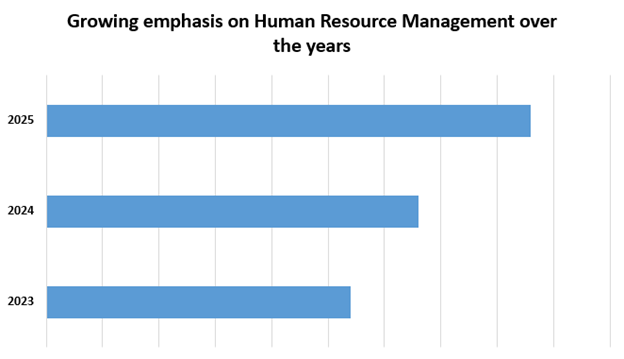
HR management professionals help people adjust to these shifts and succeed despite all the highs and lows. They guide them through confusing times and ultimately thrive in the workplace.
3. Setting the work culture
A company’s working environment is shaped by its human resources managers. They focus on aspects like employee satisfaction and identify what motivates people to perform better.
According to a recent survey, businesses with strong work cultures observe 40% higher retention rates.
Apart from this, they also gather feedback to identify areas of the company that need improvement. When employees feel seen in the workplace, they’re encouraged not just to stay, but also to put in more effort. All of this, in turn, benefits the organization.
4. Helping managers lead better
Managers are needed to lead and oversee teams in organizations. They directly interact with employees at different levels, so they also need support in fulfilling their responsibilities.
This is where HR comes in to save the day. They guide the managers on HR management practices and conflict resolution. This not only makes things easier for them but also improves the overall performance of the organization’s staff.
5. Getting the best people
One problem that many recruiters face is that of talent acquisition. When it comes to attracting and hiring skilled professionals, they often fail to find the perfect matches for positions.
This is why HR builds impressive employer brands to attract more attention. With effective selection processes and recruitment strategies, they make the hiring process much easier for both recruiters and potential employees.
In case you’re thinking, “This sounds good, how do I get into this field?”
Here are the skills you need to secure a job in HRM
Communication skills
Since this role is all about people, you should be able to communicate effectively with them. In addition to this, you also need to be an active listener, respond quickly, and write professionally.
Empathy
As an HR manager, you’ll have to face a lot of sensitive issues. These situations will require you to be kind and handle matters professionally. This is why you must show great empathy when dealing with staff.
Problem Solving
HR management doesn’t just involve hiring people and retaining them. You will have to resolve conflicts, address employees’ issues, and develop solutions in the event of workplace crises. For this reason, problem-solving skills are a must-have.
Time management
From paperwork to training and meetings, HR has hundreds of tasks to juggle at once. So you should know how to effectively manage your time for maximum productivity.
Apart from this, you can also get the Chartered Institute of Personnel and Development if you’re based in the UK. This certification is for anyone who wants to get into HRM roles. For help with your assigned writing, you can just search “Write my CIPD assignment” and get custom papers made.
People Also Ask
Is HR a good career for the long run?
Absolutely, businesses are becoming more and more employee-focused these days. For this reason, HRM roles are becoming more important. So if you wish to enter this field, there are many paths you can take for further growth.
Can HR be replaced by AI?
The power of artificial intelligence can’t be denied, but that doesn’t mean it’s going to take over completely, especially in fields that involve interactions with people. AI can’t automate things like conflict resolution and culture building in the workplace.
What do L&D specialists do?
Learning and Development (L&D) specialists design and deliver training programs. They support the growth of employees and motivate them for better performance.
Wrapping Up
Yes, the world is moving towards more and more automation. It’s only natural to think one robots will be doing everything instead of humans, and we’ll have less work to do. But that’s not the case; machines can’t replace everything we do. HR management remains one of the most relevant professions, especially in the UK.
It is these professionals who build the workplace culture, solve problems, and promote growth. They don’t just “manage” employees, they empower them. So, the next time you see a business thriving, know that it’s not just their technology helping them, it’s their people.